
Healthy eating can feel unnecessarily complicated.
One person tells you to count every calorie.
Another says carbohydrates are the problem.
Someone else insists protein is all that matters.
Then there are apps, macro calculators, meal plans, food scales, and endless nutrition rules.
But for many people, a balanced meal can be much simpler than that.
You do not need to track every bite to improve the overall quality of your meals.
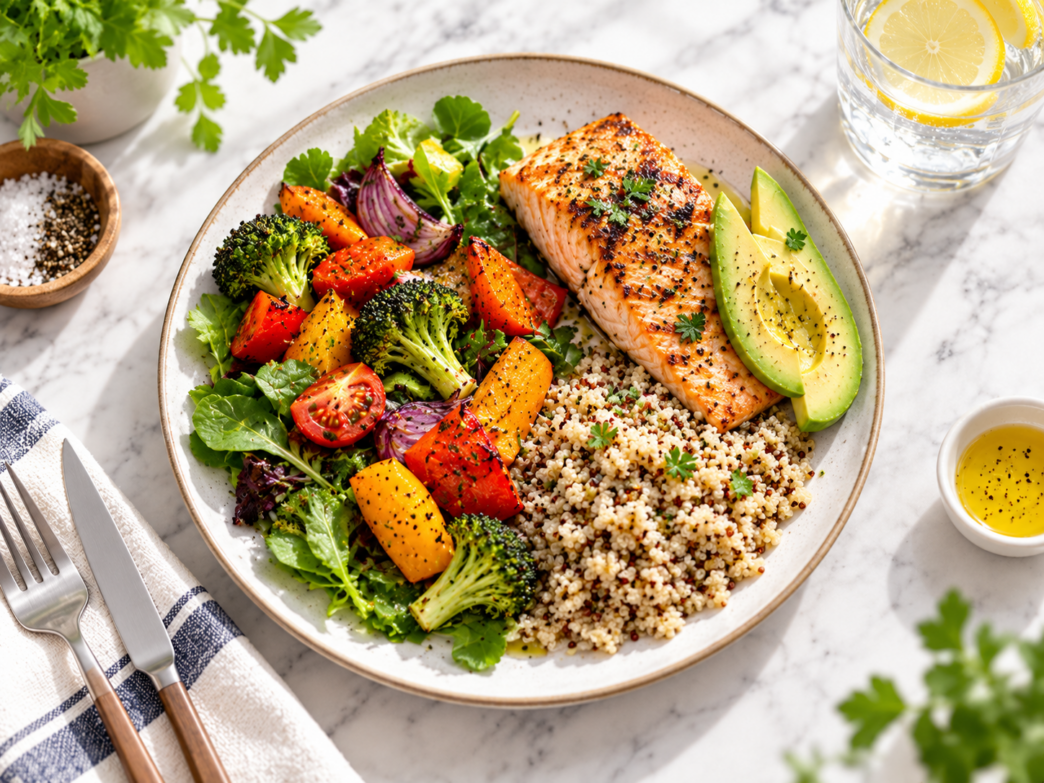
A practical way to start is to build your plate around four basic components:
Vegetables or fruit
Protein
Fiber-rich carbohydrates
Healthy fats
This approach is consistent with current U.S. nutrition guidance, which emphasizes nutrient-dense foods such as vegetables, fruits, whole grains, legumes, quality protein sources, nuts, seeds, and unsaturated fats. (myplate.gov)
The goal is not perfection.
It is creating meals that feel satisfying, provide useful nutrition, and are realistic enough to repeat.
Start With Vegetables or Fruit
One of the easiest ways to improve a meal is to add more plants.
Vegetables and fruit provide fiber, vitamins, minerals, water, and naturally occurring plant compounds.
For lunch or dinner, this might mean:
- Broccoli
- Leafy greens
- Carrots
- Peppers
- Green beans
- Tomatoes
- Zucchini
- Cauliflower
At breakfast, it might be:
- Berries
- Banana
- Apples
- Tomatoes
- Spinach
- Peppers
You do not need to eat a giant salad at every meal.
Even adding one vegetable or fruit that was not there before can improve the meal.
USDA MyPlate encourages making about half your plate fruits and vegetables as a simple visual guide. (myplate.gov)
That does not have to be exact every time.
Think of it as a useful direction rather than a strict rule.
Add a Protein Source
Protein helps make meals more substantial and supports many functions throughout the body.
Examples include:
- Eggs
- Chicken
- Turkey
- Fish
- Greek yogurt
- Cottage cheese
- Beans
- Lentils
- Tofu
- Tempeh
- Nuts
- Seeds
USDA guidance recommends varying protein sources and including options such as seafood, beans, peas, lentils, nuts, seeds, soy foods, eggs, poultry, and meat. (myplate.gov)
A useful question to ask is:
Where is the protein in this meal?
If the answer is not obvious, you may want to add one.
For example:
A bowl of plain pasta can become more balanced with chicken, beans, lentils, tofu, or another protein source.
Toast becomes a more complete breakfast with eggs, Greek yogurt, cottage cheese, or nut butter.
Choose a Fiber-Rich Carbohydrate
Carbohydrates are not automatically unhealthy.
They are an important source of energy.
The bigger question is what kind of carbohydrate food you choose most often.
Fiber-rich options include:
- Oats
- Brown rice
- Quinoa
- Barley
- Whole-grain bread
- Whole-grain pasta
- Beans
- Lentils
- Sweet potatoes
- Potatoes
- Fruit
USDA recommends making at least half of grain choices whole grains. (myplate.gov)
Whole grains contain more fiber and nutrients than many refined grain products.
That does not mean you need to eliminate white rice, regular pasta, or bread.
It simply means you can include whole-grain and fiber-rich choices more often.
Include Healthy Fats
Fat is another essential nutrient.
Foods containing mostly unsaturated fats can fit well into balanced meals.
Examples include:
- Avocado
- Olive oil
- Nuts
- Seeds
- Nut butter
- Fatty fish
Healthy fats can also make meals more satisfying.
For example:
Add avocado to a grain bowl.
Use olive oil on roasted vegetables.
Sprinkle walnuts onto oatmeal.
Add peanut butter to whole-grain toast.
You do not need large amounts.
A modest portion is often enough to add flavor and nutritional value.
Use the Plate Method
If you want a simple visual guide, the plate method can help.
A commonly used approach is:
Half the plate: nonstarchy vegetables
One quarter: protein
One quarter: carbohydrate-rich food
This method is also used in CDC diabetes meal-planning guidance because it creates an easy way to balance meals without complicated calculations. (cdc.gov)
For someone without diabetes, it can still be a useful general framework.
For example:
Dinner
Half plate: broccoli and carrots
Quarter plate: grilled chicken
Quarter plate: brown rice
Add olive oil or avocado for healthy fat.
Simple.
No calculator required.
What About Breakfast?
The same basic idea works in the morning.
You do not need a literal dinner plate.
Think in components.
Example 1
Oatmeal + Greek yogurt + berries + walnuts
Example 2
Eggs + whole-grain toast + avocado + fruit
Example 3
Cottage cheese + berries + oats + nuts
Example 4
Tofu scramble + vegetables + whole-grain toast
Each meal includes protein, fiber-rich carbohydrate, produce, and some fat.
That is the pattern.
What About Lunch?
Lunch often becomes unbalanced because it is rushed.
A balanced lunch can be built quickly.
Grain bowl
Brown rice or quinoa
- chicken, tofu, or beans
- mixed vegetables
- avocado or olive oil
Sandwich
Whole-grain bread
- turkey, chicken, tuna, hummus, or egg
- lettuce and tomato
- fruit on the side
Salad
Leafy greens
- beans or grilled protein
- vegetables
- whole grain
- olive-oil-based dressing
The goal is not to make lunch look perfect.
It is to avoid meals that consist almost entirely of one type of food.
Does Every Meal Need All Four Components?
No.
Nutrition does not need to be that rigid.
Sometimes breakfast is just yogurt and fruit.
Sometimes lunch is soup.
Sometimes dinner is pizza.
One imperfect meal does not determine your health.
The bigger picture matters more.
But if most meals contain at least a few of these components, your overall diet tends to become more balanced naturally.
Portion Size Still Matters
Not counting calories does not mean portion size is irrelevant.
You can still pay attention to hunger, fullness, and serving sizes.
The plate method can help because it gives each part of the meal a place without requiring you to weigh food.
You can also ask yourself:
Am I comfortably full?
Am I still hungry?
Did this meal keep me satisfied?
Those questions are often more practical than obsessing over exact calorie numbers.
Why Protein and Fiber Matter Together
Meals containing both protein and fiber tend to feel more substantial.
Fiber slows digestion and contributes to fullness.
Protein can also increase satiety.
That is why combinations such as these often work well:
Apple + peanut butter
Greek yogurt + berries
Oatmeal + nuts + yogurt
Beans + brown rice + vegetables
Whole-grain toast + eggs + avocado
CDC nutrition guidance also emphasizes fiber-rich foods and quality protein as part of healthy eating. (cdc.gov)
Do You Need to Avoid Carbs at Dinner?
No.
There is no general rule that carbohydrates become unhealthy after a certain time of day.
What matters more is the overall meal, portion size, and your individual needs.
A dinner containing:
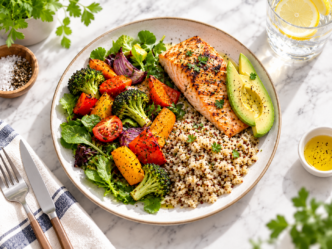
Salmon + brown rice + broccoli
can be perfectly balanced.
So can:
Chicken + sweet potato + vegetables
or
Beans + quinoa + avocado + salad
Carbohydrates can be part of nutritious meals at any time of day.
What About Weight Loss?
Some people start counting calories because they want to lose weight.
Calorie balance does matter for body weight.
But not everyone wants or needs to track calories.
For some people, improving meal quality, eating more fiber and protein, reducing sugary beverages, and becoming more physically active can help them make healthier choices without constant tracking.
Others may benefit from more structured guidance.
If weight management is a major health goal, a registered dietitian can help create a plan that fits your needs.
A Simple Grocery List for Balanced Meals
Keeping basic foods at home makes balanced meals much easier.
Protein
Eggs
Greek yogurt
Chicken
Fish
Beans
Lentils
Tofu
Fiber-rich carbohydrates
Oats
Brown rice
Quinoa
Whole-grain bread
Potatoes
Sweet potatoes
Vegetables and fruit
Broccoli
Spinach
Carrots
Peppers
Berries
Apples
Bananas
Healthy fats
Olive oil
Avocado
Nuts
Seeds
Nut butter
You do not need dozens of ingredients.
A small rotation of reliable foods is enough.
Five Easy Balanced Meal Examples
1. Breakfast
Oatmeal + Greek yogurt + berries + walnuts
2. Lunch
Chicken or chickpea bowl + quinoa + vegetables + avocado
3. Snack
Apple + peanut butter
4. Dinner
Salmon + brown rice + roasted broccoli
5. Vegetarian Dinner
Lentils + sweet potato + spinach + olive oil
These meals are not special.
That is what makes them useful.
The Bottom Line
You do not need to count every calorie to build better meals.
Start with a simple structure:
Add vegetables or fruit.
Include protein.
Choose a fiber-rich carbohydrate.
Include a modest amount of healthy fat.
Then adjust portions based on hunger, activity, health needs, and personal preferences.
Healthy eating becomes easier when you stop treating every meal like a math problem.
The best meal plan is one you can actually follow in real life.
Frequently Asked Questions
What makes a meal balanced?
A balanced meal generally includes a combination of vegetables or fruit, protein, fiber-rich carbohydrates, and healthy fats. USDA MyPlate provides a similar visual framework. (myplate.gov)
Do I need to count calories to eat healthy?
Not necessarily. Many people can improve diet quality by focusing on balanced meals, portions, fiber, protein, and nutrient-dense foods without tracking every calorie.
What should half my plate be?
USDA MyPlate encourages making about half of your plate fruits and vegetables. (myplate.gov)
Are carbohydrates part of a balanced meal?
Yes. Fiber-rich carbohydrate foods such as whole grains, beans, lentils, potatoes, and fruit can all fit into a healthy eating pattern.
What are good protein choices?
Eggs, fish, poultry, beans, lentils, tofu, nuts, seeds, Greek yogurt, and other protein foods can all fit depending on dietary preferences. (myplate.gov)
Can I eat healthy without measuring food?
Yes. Visual methods such as the plate method can help you create balanced meals without weighing or measuring every ingredient.
Health Living Note
Healthy eating does not have to become a spreadsheet.
Think in simple pieces:
Protein. Plants. Fiber-rich carbs. Healthy fats.
Build most meals around those ideas and adjust based on what works for your life.
Consistency matters far more than creating a perfect plate every time.