
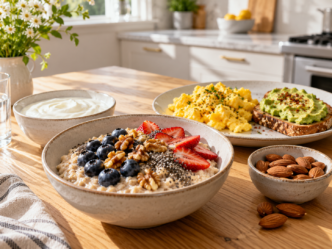
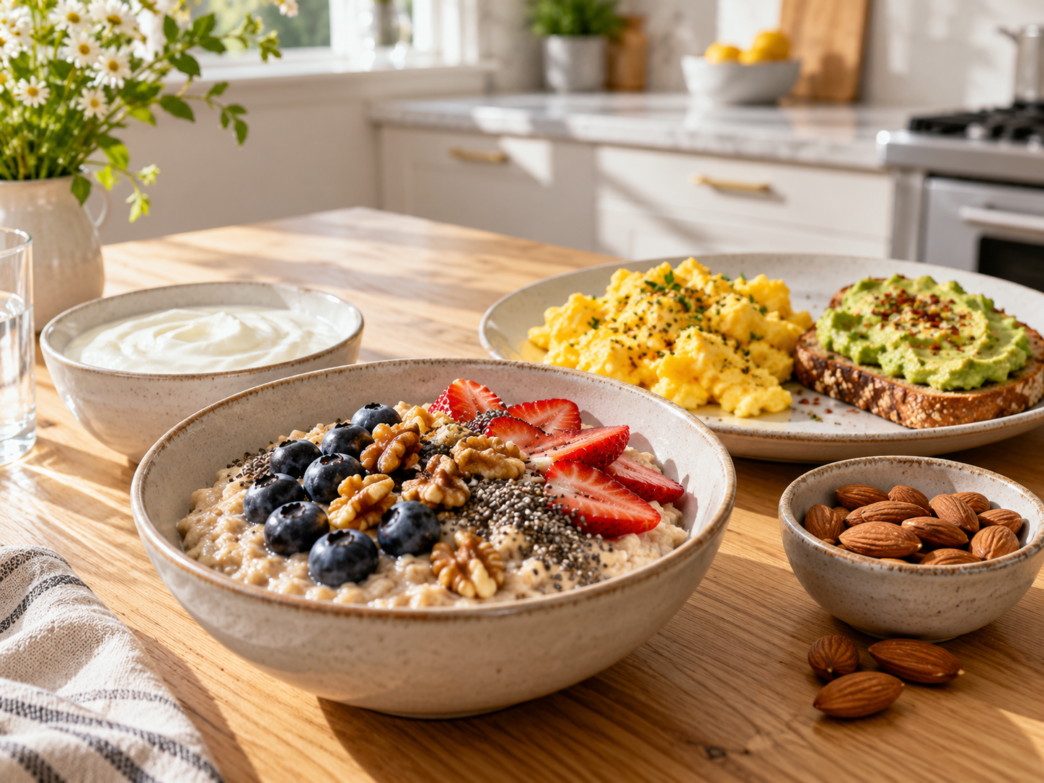
A breakfast can look healthy and still leave you hungry again an hour later.
Maybe you grabbed a piece of toast.
Maybe you had a bowl of sugary cereal.
Or perhaps breakfast was simply coffee and whatever was easiest to eat on the way out the door.
There is no rule saying everyone must eat breakfast at exactly the same time—or even that every person needs the same kind of breakfast.
But if you do eat in the morning and want that meal to feel more satisfying, the foods you combine can make a difference.
A practical breakfast usually works better when it contains a mix of protein, fiber-rich carbohydrates, fruit or vegetables, and nutritious fats.
Current CDC healthy-eating guidance recommends prioritizing protein foods, fruits and vegetables, healthy fats, dairy without added sugars, and fiber-rich whole grains as part of an overall nutrient-dense eating pattern. CDC
Here are some simple breakfast foods that can help you build a more satisfying start to the day.
1. Oatmeal
Oatmeal is one of the easiest foods to turn into a balanced breakfast.
Oats provide fiber and can serve as a base for fruit, nuts, seeds, yogurt, and other nutritious toppings.
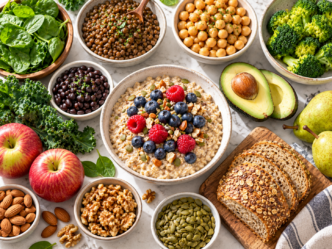
CDC specifically recommends oatmeal as one way to increase fiber intake and suggests topping whole-grain cereal with foods such as berries, pumpkin seeds, or almonds. Fiber can help meals feel more satisfying because it slows digestion and contributes to fullness. CDC
Instead of making plain oatmeal and stopping there, build it out.
Try:
Oatmeal + blueberries + walnuts + Greek yogurt
or
Oatmeal + banana + peanut butter + chia seeds
This provides more nutritional variety than oatmeal alone.
Watch the added sugar
Some flavored instant oatmeals contain significant added sugars.
You don’t have to avoid them completely, but compare labels when choosing between products.
Plain oats flavored with fruit, cinnamon, nuts, or seeds give you more control over sweetness.
2. Eggs
Eggs are a convenient protein source and can work with almost any style of breakfast.
You can eat them scrambled, boiled, poached, baked into an omelet, or added to whole-grain toast.
CDC’s current healthy-eating guidance includes eggs among protein foods that can fit into a nutritious eating pattern. CDC
But eggs don’t need to be the entire breakfast.
A more balanced meal could be:
Eggs + whole-grain toast + avocado + berries
or
Vegetable omelet + fruit + oatmeal
Adding a fiber-rich carbohydrate or fruit can make the meal more complete.
3. Greek Yogurt
Plain Greek yogurt can be a practical breakfast option because it provides protein and works well with fruit, nuts, seeds, and whole grains.
CDC recommends dairy foods without added sugars and specifically suggests topping unsweetened yogurt with fruit. CDC
Try:
Greek yogurt + blueberries + strawberries + walnuts
or
Greek yogurt + oats + chia seeds + sliced banana
If you’re buying flavored yogurt, check the Nutrition Facts label.
Some products contain a large amount of added sugar even though they’re marketed as healthy.
Plain yogurt with naturally sweet fruit is often an easy alternative.
4. Berries
Blueberries, strawberries, raspberries, and blackberries are easy additions to breakfast.
They provide fiber, vitamins, minerals, and naturally occurring plant compounds.
CDC notes that fruits and vegetables provide water and fiber that can help slow digestion and increase feelings of fullness. CDC
You can add berries to:
- Oatmeal
- Yogurt
- Whole-grain cereal
- Cottage cheese
- Smoothies
Frozen berries work too.
They can be especially convenient when fresh berries aren’t in season or are expensive.
5. Whole-Grain Toast
Toast isn’t automatically an unhealthy breakfast.
The type of bread and what you put on it matter.
Fiber-rich whole grains can contribute to a more satisfying meal than highly refined grain options.
CDC recommends prioritizing fiber-rich whole grains, and when choosing bread, looking for products where whole-grain or whole-wheat flour appears prominently in the ingredient list. CDC
Try:
Whole-grain toast + eggs
Whole-grain toast + avocado
Whole-grain toast + peanut butter + banana
The goal is to pair the carbohydrate with protein, fiber, or nutritious fat instead of eating plain toast by itself.
6. Nut Butter
Peanut butter, almond butter, and other nut butters can add flavor, fat, and protein to breakfast.
They’re easy to use with foods such as:
- Whole-grain toast
- Oatmeal
- Apples
- Bananas
- Smoothies
A simple breakfast could be:
Whole-grain toast + peanut butter + banana slices
Nut butter is calorie-dense, so you don’t need an enormous serving.
And if you’re buying packaged nut butter, look at the ingredient list and Nutrition Facts panel because some products contain added sugars.
7. Nuts and Seeds
Walnuts, almonds, pistachios, pumpkin seeds, chia seeds, and flaxseed can add both texture and nutrients to breakfast.
CDC includes nuts and seeds among healthy protein foods and fiber sources. CDC
They’re especially easy to add to:
- Oatmeal
- Yogurt
- Whole-grain cereal
- Smoothies
- Cottage cheese
A small amount can make a breakfast feel much more substantial.
For example:
Plain yogurt + berries + walnuts + chia seeds
takes only a few minutes to prepare but combines protein, fiber, and fat.
8. Avocado
Avocado is another easy breakfast addition.
It contains fiber and predominantly unsaturated fat.
Try it on whole-grain toast with eggs, tomatoes, or beans.
For example:
Whole-grain toast + avocado + egg + tomato
Or:
Avocado toast + chickpeas + fruit on the side
CDC’s fiber guidance even gives avocado toast with chickpeas as an example of a fiber-friendly breakfast. CDC
You don’t need an entire avocado every morning.
A smaller portion can still add texture and flavor.
9. Fruit
Whole fruit can make breakfast more filling and nutritious.
Good choices include:
- Apples
- Pears
- Oranges
- Bananas
- Berries
- Peaches
- Kiwi
Whole fruit is generally more satisfying than juice because it retains fiber.
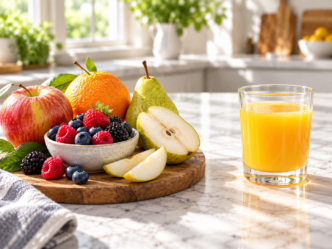
CDC recommends choosing whole fruit over fruit juice, noting that whole fruit contains fiber that can help you feel fuller. CDC
A glass of juice may be easy to drink quickly.
Eating an orange takes more time and provides the natural fiber that juice largely lacks.
10. Cottage Cheese
Cottage cheese can provide protein and works well with both sweet and savory foods.
Try it with:
- Berries
- Peaches
- Pears
- Nuts
- Seeds
- Tomatoes
- Whole-grain toast
If sodium is something you’re monitoring, compare labels because sodium levels vary significantly between brands.
A simple breakfast might be:
Cottage cheese + berries + walnuts + whole-grain toast
Again, the idea isn’t to find one perfect breakfast food.
It’s to combine foods in a way that gives the meal more staying power.
What Makes a Breakfast More Filling?
Instead of memorizing dozens of breakfast recipes, use a simple framework.
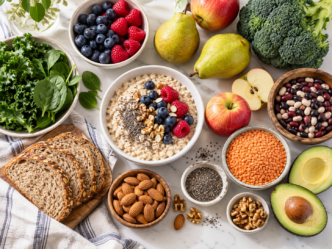
Try to include at least a few of these components.
Protein
Examples:
Eggs, Greek yogurt, cottage cheese, beans, lentils, nuts, seeds, tofu, or another appropriate protein source.
CDC recommends prioritizing protein foods at meals, including eggs, legumes, nuts, seeds, soy, seafood, meat, and poultry. CDC
Fiber
Examples:
Oats, whole-grain bread, berries, apples, pears, beans, vegetables, nuts, and seeds.
Fiber can help support digestive health and help you feel fuller longer. CDC
Nutritious Fat
Examples:
Avocado, nuts, seeds, peanut butter, or olive oil.
Fruit or Vegetables
Examples:
Berries, bananas, apples, spinach, tomatoes, peppers, mushrooms, or avocado.
You don’t need all four categories in perfect proportions every morning.
But adding more than one often creates a more satisfying meal.
Why Some Breakfasts Leave You Hungry Quickly
Consider a breakfast made only of a sweet pastry and coffee.
It may contain plenty of calories but relatively little protein or fiber.
Compare that with oatmeal topped with berries, walnuts, and Greek yogurt.
Both meals provide energy.
But the second meal contains more of the nutrients associated with fullness.
CDC guidance specifically notes that pairing carbohydrate-containing foods with protein can help people stay fuller longer. CDC
This doesn’t mean pastries are forbidden.
It means that if your goal is a breakfast that keeps you satisfied, relying mainly on refined carbohydrates may not work as well as a more balanced meal.
What About Breakfast Cereal?
Cereal can be convenient, but products vary dramatically.
Some contain whole grains and substantial fiber.
Others contain relatively little fiber and significant added sugar.
Read the Nutrition Facts label.
The FDA recommends using % Daily Value to compare foods and choosing products higher in nutrients such as dietary fiber while limiting nutrients such as added sugars, saturated fat, and sodium. As a general guide, 5% Daily Value or less is considered low, while 20% or more is considered high for a nutrient. U.S. Food and Drug Administration
You can also improve a cereal breakfast by adding:
Milk or yogurt, berries, nuts, and seeds.
Are Smoothies Filling?
They can be.
But it depends on what’s inside.
A smoothie made only from juice and fruit may be much less satisfying than one containing protein, fiber, and fat.
A more balanced smoothie might include:
Berries + Greek yogurt + milk + oats + peanut butter
or
Banana + unsweetened yogurt + chia seeds + spinach + milk
Be careful with oversized smoothies loaded with juice, sweetened yogurt, syrups, and multiple servings of fruit.
“Healthy” ingredients can still create a very large meal.
What If You’re Not Hungry in the Morning?
You don’t have to force yourself to eat the moment you wake up.
Breakfast timing is personal.
Some people feel best eating soon after waking.
Others prefer eating later.
What matters more is the quality of your overall eating pattern.
If you’re not hungry early, you might prepare something portable for later:
- Greek yogurt with fruit
- Hard-boiled eggs and an apple
- Oatmeal
- Whole-grain toast with nut butter
- Cottage cheese and berries
The goal isn’t to follow an arbitrary breakfast rule.
It’s to make nutritious eating easier when you do become hungry.
Five Easy Breakfast Combinations
If you don’t want to think about breakfast every morning, rotate a few basic combinations.
1. Oatmeal Bowl
Oats + blueberries + Greek yogurt + walnuts
2. Egg Breakfast
Eggs + whole-grain toast + avocado + fruit
3. Yogurt Bowl
Plain Greek yogurt + berries + chia seeds + almonds
4. Quick Toast
Whole-grain toast + peanut butter + banana
5. Savory Breakfast
Egg or tofu scramble + spinach + peppers + whole-grain toast
None requires unusual ingredients.
That’s what makes them useful.
Don’t Confuse “Healthy” With “Low-Calorie”
A satisfying breakfast isn’t necessarily the breakfast containing the fewest calories possible.
Meals that are too small may simply leave you hungry shortly afterward.
A better question is:
Does this meal provide useful nutrition and keep me comfortably satisfied?
Your individual energy needs depend on factors such as body size, activity, age, health, and overall diet.
There isn’t one breakfast calorie target that fits everyone.
Breakfast Doesn’t Need to Be Perfect
Maybe today’s breakfast is yogurt and fruit.
Tomorrow it’s eggs and toast.
Another day you eat leftovers from dinner.
That’s fine.
Healthy eating doesn’t require every morning to look like a carefully styled social-media photo.
What matters is the overall pattern.
CDC’s latest guidance emphasizes consistently choosing nutrient-dense foods while accounting for personal preferences and budget. CDC
A realistic breakfast you can prepare repeatedly is more useful than an elaborate one you make twice and abandon.
The Bottom Line
If you want breakfast to keep you satisfied longer, don’t search for one magical food.
Build a combination.
Include a protein source.
Add fiber-rich foods such as oats, whole grains, fruit, nuts, seeds, or vegetables.
Include nutritious fats when they fit.
And choose whole foods more often than highly refined breakfast products.
A bowl of oatmeal becomes more satisfying with berries, nuts, and yogurt.
Toast becomes more substantial with eggs or nut butter.
Yogurt becomes a meal when you add fruit, seeds, and whole grains.
Healthy breakfast doesn’t have to mean complicated breakfast.
Frequently Asked Questions
What breakfast foods keep you full the longest?
Meals containing combinations of protein, fiber, and healthy fats are generally more satisfying than meals consisting mainly of refined carbohydrates. Examples include oatmeal with yogurt and nuts, eggs with whole-grain toast and avocado, or Greek yogurt with berries and seeds. CDC
Is oatmeal a filling breakfast?
It can be. Oats provide fiber, and adding protein and healthy fats—such as Greek yogurt, nuts, or seeds—can make the meal more substantial. CDC
Are eggs a healthy breakfast?
Eggs are a protein food and can fit into a nutritious eating pattern. Combining them with vegetables, whole grains, or fruit can create a more balanced meal. CDC
Is fruit enough for breakfast?
Fruit provides nutrients, water, and fiber, but fruit alone may not feel satisfying for everyone. Pairing it with a protein source such as yogurt, eggs, cottage cheese, nuts, or nut butter can create a more balanced breakfast.
Is whole fruit better than juice at breakfast?
Whole fruit generally provides more fiber and can be more filling than juice. CDC recommends choosing whole fruit more often than fruit juice. CDC
Do I have to eat breakfast every day?
Not everyone feels hungry early in the morning. The overall quality of your diet matters more than forcing yourself to eat at a specific time. Individual medical conditions and medication schedules can change meal-timing needs.
Health Living Note
A filling breakfast doesn’t need an expensive powder, a complicated recipe, or an enormous plate.
Remember the basics:
Protein. Fiber. Whole foods. Fruit or vegetables. Nutritious fats.
Build around those ideas and choose combinations you genuinely enjoy.
The breakfast you’re willing to make regularly is usually more useful than the “perfect” breakfast you never have time to prepare.